· Marguerite Aubin
How to Wind a Skein of Yarn Into a Ball
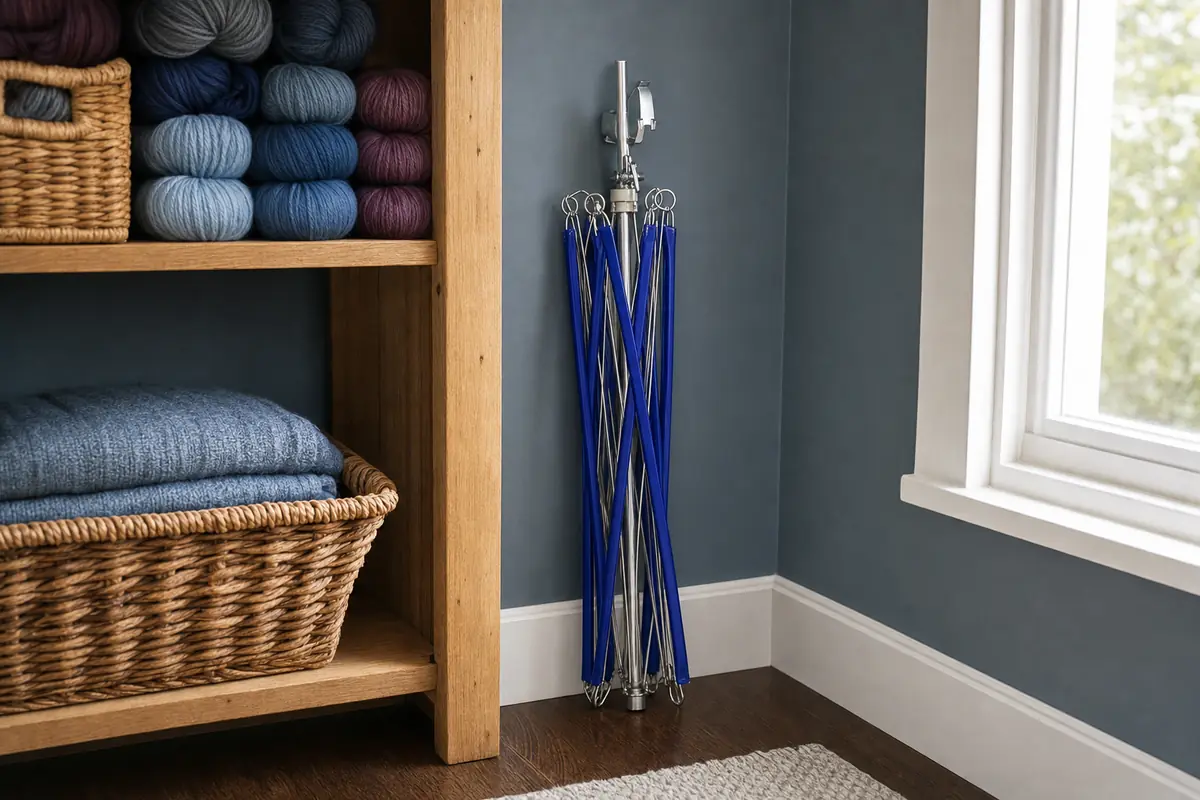
Winding a skein is one of those tasks that is either three quiet minutes or forty frustrating ones, and the difference is almost entirely in the setup. This guide covers the tooled method, the no-tools method and the fibers that behave badly whichever route you take.
First, be clear about what you are holding
The words get used loosely, so it is worth a moment. A hank is a long loop of yarn twisted into a bundle, and it is what most hand dyed yarn is sold as. In everyday American usage the same object is usually called a skein, which is why this article uses the word you probably typed into a search box. A ball is a round wound bundle you pull from the outside. A cake is the flat center-pull shape a ball winder makes, and it sits still on the table while you knit.
You do not need to convert a machine wound skein, the kind that comes in a cylinder with a label around it, because it is already ready to knit. You do need to convert a hand dyed hank. Untwist it, and you will see immediately why.
Method 1: swift plus ball winder
This is the fast, tidy route and it is what most yarn shops use behind the counter. Clamp the swift to a table edge and open the arms until the loop of yarn sits snug without stretching. Clamp the ball winder two to three feet away on the same edge. Cut the ties only after the loop is spread on the arms, never before.
Find one free end, run it through the winder guide, anchor it around the spindle with two or three turns, then crank at a steady, unhurried pace. The winder pulls, the swift turns, and the yarn feeds off in the order it was wound. Keep your eyes on the strand between the two tools rather than on the crank. Slack means you are winding faster than the swift can follow. A tug means a loop has caught on an arm.
The full sequence, including how to set the clamp on an awkward table, is in how to use a yarn swift. If you want both tools in one go, we sell them together as a swift and winder set.
Height of the Skeinwright hand crank ball winder (19 cm)
— Skeinwright published specification sheet, 2026
Method 2: no swift, no winder, just patience
You can absolutely wind a skein with nothing but your hands, and every knitter should know how, if only for the day a skein arrives while your tools are packed away.
Untwist the hank and open the circle. Hook it over the backs of two dining chairs pulled apart until the loop is gently taut, or over one chair back if the loop is small, or ask someone to hold it on their forearms. Cut the ties. Find an end. Then wind slowly, pulling only a foot or two of yarn at a time and letting the loop settle between pulls.
The problem with this method is that nothing rotates. On a swift the whole loop turns, so the yarn never has to slide across its neighbors. On a chair back the loop stays put and every yard you pull drags across other strands. That is where tangles are born. It works, and it works better with smooth, plied, non-fuzzy yarn, but it takes real attention. We compared the options properly in yarn swift alternatives.
Winding a center-pull ball by hand
If you are winding by hand, aim for a center-pull ball rather than a tight round one. A tight ball stretches the yarn while it sits, and elastic wool that has been stored under tension comes out limp.
Start by laying a tail of about eight inches across your palm, held down by your thumb. Wrap the working yarn loosely around two fingers about twenty times to build a soft core, slide the core off, then keep wrapping around it while turning the ball a little after every few wraps. Changing the angle constantly is what keeps it round. Keep the original tail poking out where you can find it, and when you finish, that tail is your center pull. Loose is the whole secret. If the yarn dents your fingers as you wrap, you are pulling too hard.
Fibers that misbehave, and what to do
Some yarns fight you regardless of method. None of these are reasons to give up, they simply need a slower hand.
| Yarn type | What goes wrong | What helps |
|---|---|---|
| Mohair and other halo fibers | Strands cling to each other and lift in clumps | Spread the loop wide, wind slowly, separate clinging strands by hand rather than pulling |
| Silk and slippery blends | Loops slide off the arms and the cake collapses | Open the swift a little wider for grip, wind a slightly denser cake |
| Laceweight | Any crossing strand becomes a hard knot | Very slow winding, and check both ends before choosing one |
| Superwash and chainette | Stretches under tension, then relaxes unevenly | Snug rather than taut on the swift, gentle cranking |
| Very large jumbo skeins | Loop is wider than the frame or too heavy for a small spindle | Open the swift fully, and wind two smaller balls rather than one giant one |
The mistakes that cause almost every tangle
Four habits account for most of the trouble. Cutting the ties before the loop is spread on a holder is the first, and it is the most common. Pulling from the wrong end is the second, and the cure is simply to try the other one. Winding faster than the holder can turn is the third. Winding under tension is the fourth, and it does not tangle anything, it just leaves your yarn tired.
If a knot does appear, stop cranking immediately. Every extra turn tightens it. Lift the whole loop area off the frame, work the crossing strand free with your fingers, then reseat it and carry on. The 285 buyers who have rated our winder mention the same thing again and again: steady beats fast.
Verified four and five star buyer ratings of the hand crank ball winder, averaging 4.9
— Skeinwright verified buyer ratings, 2026
Once you have wound a few, the routine becomes automatic. Read what a yarn swift is if you are still deciding, the ball winder buying guide if you are choosing a winder, or the reviews page for what buyers actually say. Everything we make is on the Skeinwright home page, and the rest of our writing is in the guides index.